



Places to visit · Sorrento
Sorrento Cathedral: history and what to see
Sorrento Cathedral, dedicated to Saints Philip and James: its history, Romanesque bell tower, fine marquetry and the treasures not to miss inside.
4 min read
Sorrento Cathedral, officially the Cathedral of Saints Philip and James, is the mother church of the town and the seat of the Archdiocese of Sorrento-Castellammare di Stabia. It stands in the heart of the old town, a five-minute walk from Piazza Tasso, and is well worth a visit for its long history, its marble-clad Baroque interior and the fine marquetry that expresses Sorrento's craft soul.
Almost a thousand years of history
The first cathedral stood outside the walls, where the cemetery is today; in the 10th century the see moved inside the town, to the church of Santi Felice e Baccolo, while a new building was awaited. The new cathedral was consecrated in 1113 to the Virgin of the Assumption and the apostles Philip and James. It was enlarged several times over the following centuries; after the Turkish sack of 1558, which devastated Sorrento and destroyed its archives, it was rebuilt in the second half of the 16th century at the wish of Archbishop Giulio Pavesi. The Baroque look of the interior dates from work in the early decades of the 18th century, while in 1936 the ceiling paintings were restored and the chancel was rearranged. For the wider context, read our history of Sorrento.
The façade and the bell tower
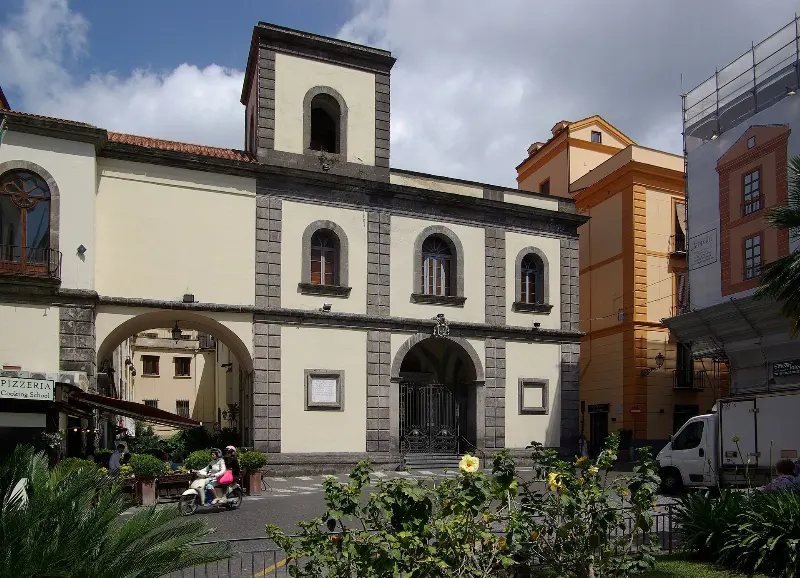
The façade we see today is fairly recent: in the early 20th century a violent whirlwind damaged its upper part, and it was rebuilt in neo-Gothic style, completed in 1924. The 16th-century central doorway is flanked by two pink marble columns taken from ancient pagan temples; the lunette above the entrance shows the Virgin of the Assumption, while the apostles Philip and James appear above the side doors. A plaque on the façade recalls Torquato Tasso, baptised in this church in 1544: his story is among the famous people of Sorrento.
The bell tower is not attached to the church: it stands about fifty metres away, facing Corso Italia. It rests on a Romanesque base, probably from the 11th century, pierced by an arch and built with reused ancient columns and marble fragments; above it rise storeys decorated with arches, cornices and niches, and a majolica clock. It is one of Sorrento's symbols and can be glimpsed from many lanes in the centre.
What to see inside
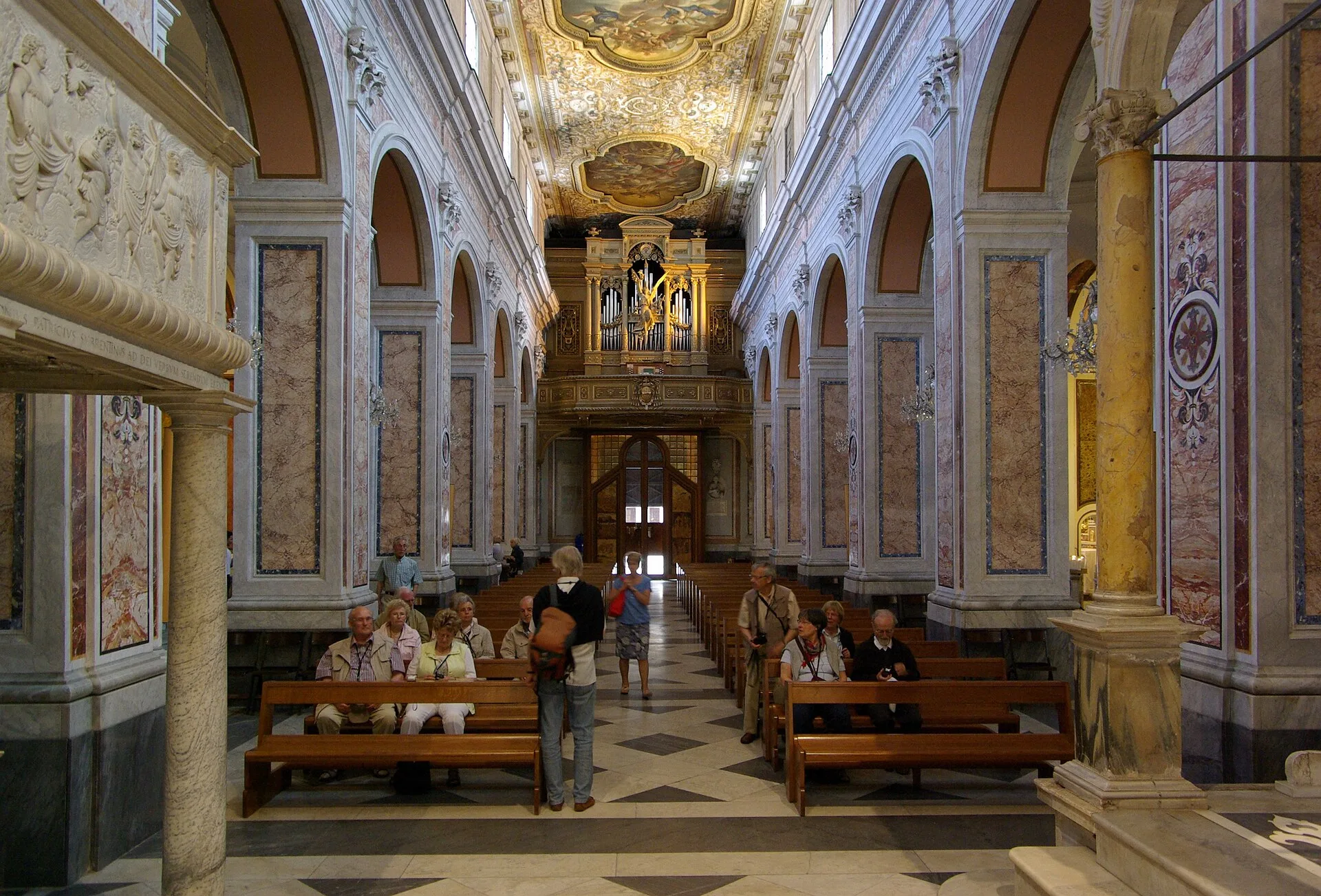
The interior, a Latin cross with three naves, is bright and rich in marble. Here is what not to miss:
- The nave ceiling, with Baroque paintings devoted to Sorrento's martyrs, by Francesco Francareccio and Oronzo and Nicola Malinconico.
- The bishop's throne and the pulpit, both 16th-century: the pulpit, resting on columns, is made of marble panels with a relief of the Baptism of Christ in the centre and the coats of arms of the noble Sorrento family Ammone.
- The wooden choir behind the altar, in Caucasian walnut, with panels inlaid by Sorrento craftsmen depicting the Apostles, the saints of Sorrento and the patron Saint Antoninus.
- The inlaid Stations of the Cross: fourteen wooden panels made by Giovanni Paturzo.
- The entrance vestibule, from 1989, with inlaid panels telling episodes from the town's religious history.
- The monumental organ, richly carved, in the choir loft above the entrance.
- The baptismal font, in the chapel of the right-hand aisle, where Torquato Tasso was baptised.
In the left transept, the chapel of Saint Antoninus holds an 18th-century wooden statue of the patron saint, whose remains lie in the nearby Basilica of Sant'Antonino. The sacristy, built in 1608, has a white marble doorway topped by a Renaissance Madonna and Child and holds portraits of the archbishops. Lovers of fine woodwork will find in our guide to Sorrento marquetry the key to many of the cathedral's works.
Getting there and visiting tips
From Piazza Tasso walk west along Corso Italia for a couple of hundred metres: the Cathedral is on your right, between the Corso and Via Santa Maria della Pietà, and the bell tower acts as a landmark. Alternatively, stroll along Via San Cesareo and walk down Via Padre Reginaldo Giuliani, which points straight at the bell tower.
- The Cathedral is a working church: dress appropriately, with shoulders and knees covered, and avoid walking around during services.
- Opening times vary with the season and with celebrations: check them on site before your visit.
- During Holy Week the processions wind through the old town: read traditions and events to know what to expect.
- On your way out, the Sedil Dominova with its frescoed loggia is just a few steps away.
Gallery 4 photos
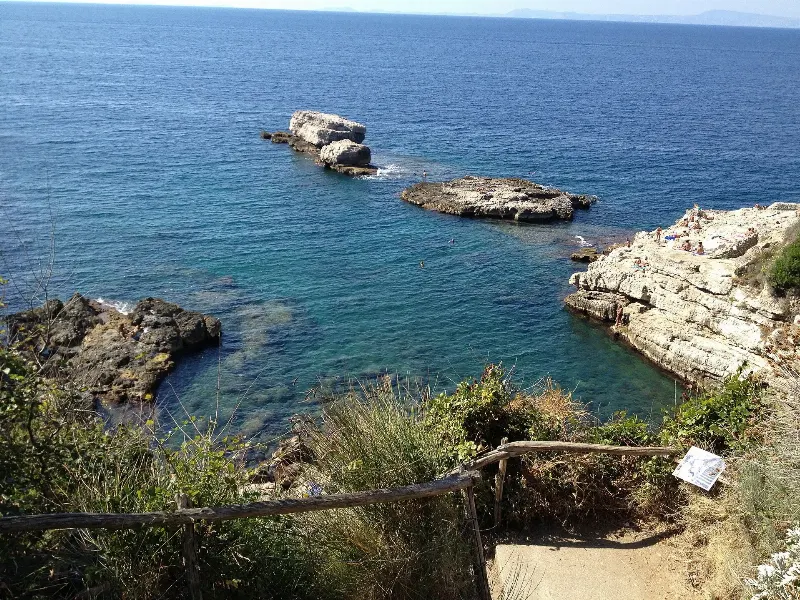
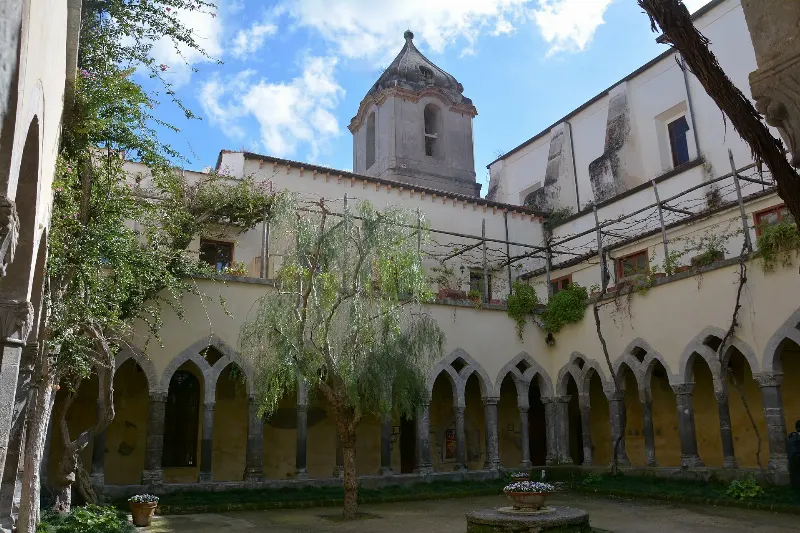
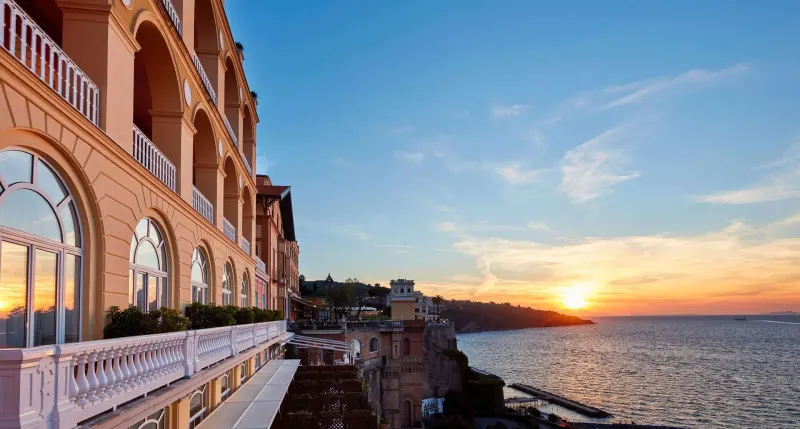
Sorrento Cathedral
01 · Photo: MentNFG, CC BY-SA 4.0 02 · Photo: Arnoldius, CC BY-SA 3.0 03 · Photo: Matthias Kabel, CC BY-SA 3.0 04 · Photo: Berthold Werner, CC BY-SA 3.0