


Places to visit · Sorrento
Via San Cesareo in Sorrento: shops & history
Via San Cesareo, Sorrento's ancient decumanus: limoncello and marquetry shops, noble doorways, the Sedil Dominova and what is really worth buying.
3 min read
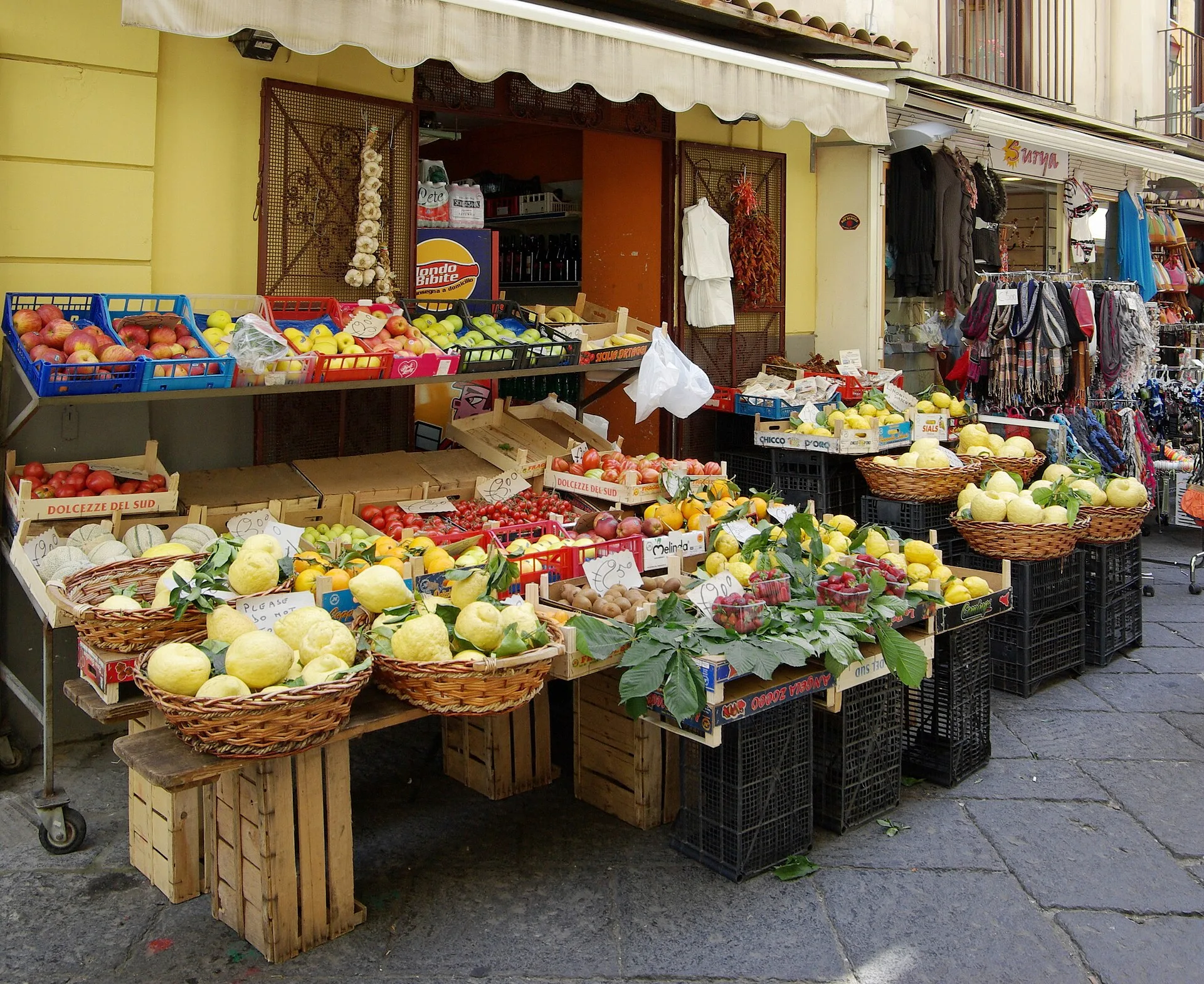
Via San Cesareo is the shopping street of Sorrento's old town: a narrow, paved pedestrian street that starts from Piazza Tasso and runs for just under three hundred metres westwards, parallel to Corso Italia. It is packed with shops selling limoncello, ceramics, marquetry and local produce, yet beneath the shop signs it keeps the layout of the ancient town and the doorways of its noble families.
The ancient decumanus of the Roman town
The centre of Sorrento still preserves the regular grid of the ancient town, made of parallel and perpendicular streets crossing at right angles. Via San Cesareo follows the decumanus maximus, the main axis that crossed the Roman town from east to west; the streets that cut across it, such as Via Padre Reginaldo Giuliani, correspond to the ancient cardines. For centuries it was the most important street in town, until the opening of Corso Italia in the 19th century took over its role as the main thoroughfare. Sorrento's great families lived along it, and it was here that the nobles of the western part of town built their seat, the Sedil Dominova. For the wider picture, read our history of Sorrento.
Palaces and doorways to look out for
Look up above the shop windows. Along the street and in the nearby lanes stand 17th- and 18th-century buildings showing the influence of Neapolitan Baroque. Their most telling feature is the doorway, usually left untouched even when the houses were remodelled. The oldest have a simple design, with a round arch and heavy stone rustication. Those from the 18th century can be recognised by horizontal bands, projecting or flat, arranged along the frame so that one falls at the keystone of the arch and two at the springing points. Spotting them becomes a little game that makes the walk far more interesting.
The Sedil Dominova and around
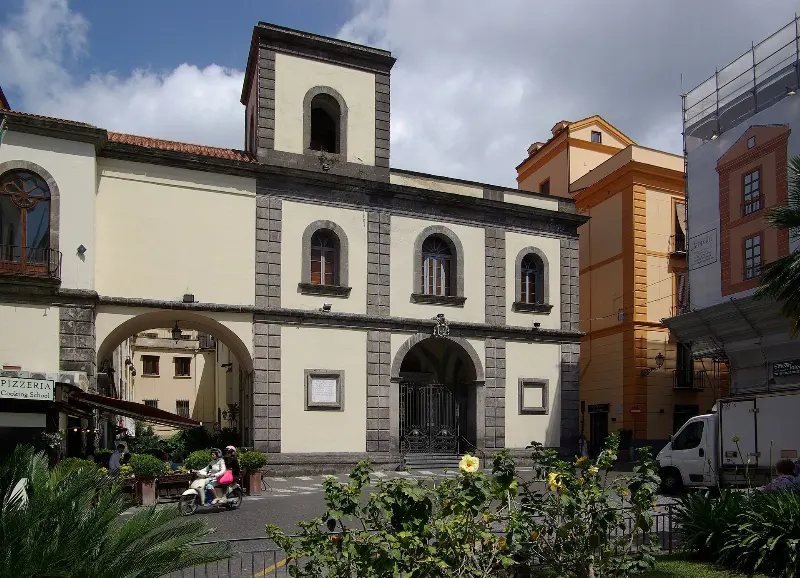
Where the street meets Via Padre Reginaldo Giuliani opens the loggia of the Sedil Dominova, with its dark stone arches, frescoed walls and dome covered in yellow and green majolica tiles. It was one of the seats where noble families met to run the town; for more than a century it has housed a workers' mutual aid society, and the frescoes can be admired through the gates. Looking south along Via Giuliani you can see the bell tower of the Cathedral, a couple of minutes' walk away. A little further south, running parallel, is Via della Pietà, with more historic palaces.
What to buy and practical tips
Via San Cesareo is the right place to take home a piece of Sorrento: limoncello and citrus liqueurs, hand-painted ceramics, inlaid wooden boxes and music boxes, made-to-measure sandals, embroidered textiles. To understand what is really worth buying, read our guides to local products and to Sorrento marquetry.
- The street is pedestrian but very narrow: in the middle of the day in high season it gets crowded, so to look at the buildings at leisure choose early morning or late afternoon.
- Always ask whether an item is made in Sorrento: alongside local craftsmanship you will also find goods made elsewhere.
- The Sorrento lemon is protected by a Protected Geographical Indication (IGP): look for the label on lemon-based products.
- There is no shortage of cafés and trattorias between the shops: to choose where to sit down, see restaurants in Sorrento.
At the end of the street, heading north, in a few minutes you reach Piazza Sant'Antonino, with the Basilica of Sant'Antonino, and just beyond it the Villa Comunale with its terrace over the bay: the best way to round off the walk.
Gallery 3 photos
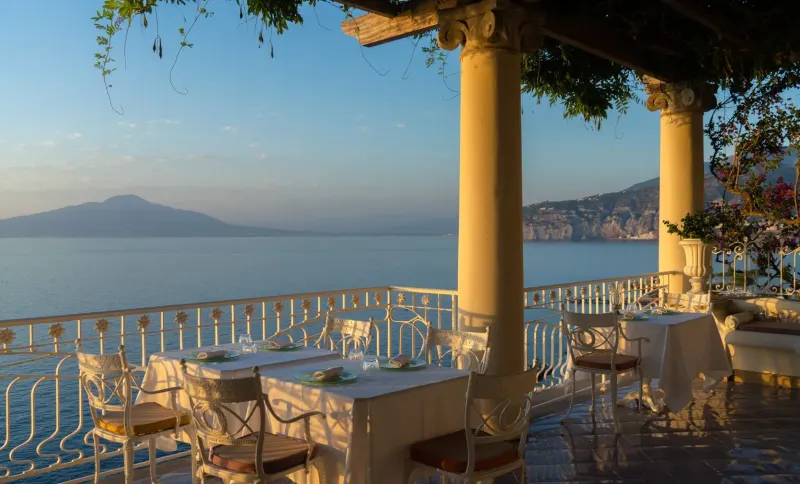
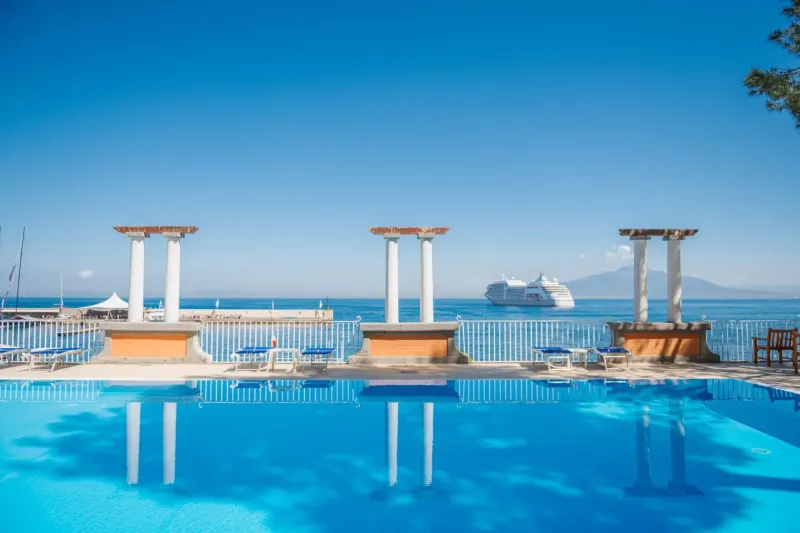
Via San Cesareo in Sorrento
01 · Photo: Elliott Brown, CC BY 2.0 02 · Photo: Berthold Werner, CC BY-SA 3.0 03 · Photo: Berthold Werner, CC BY-SA 3.0