

Places to visit · Sorrento
Museo Correale di Terranova, Sorrento
Sorrento marquetry, Capodimonte porcelain, Neapolitan paintings and a garden with a terrace over the bay: what to see at the Museo Correale.
3 min read
The Museo Correale di Terranova is Sorrento's main museum: set in an 18th-century villa surrounded by citrus groves, it holds archaeological finds, Neapolitan paintings from the 15th to the 19th century, European and Oriental porcelain, period furniture and a fine collection of Sorrento marquetry. The visit is rounded off by the garden, which ends in a terrace high above the Bay of Naples.
The history: the Correale brothers' gift
The museum was born of the generosity of Alfredo and Pompeo Correale, Counts of Terranova, the last descendants of an old Sorrento family. Having no heirs, the two brothers left instructions in their wills that the family villa, with its citrus estate and all the collections gathered over the centuries, should become a museum bearing their name. The foundation was established in 1902 and the museum was inaugurated in 1924.
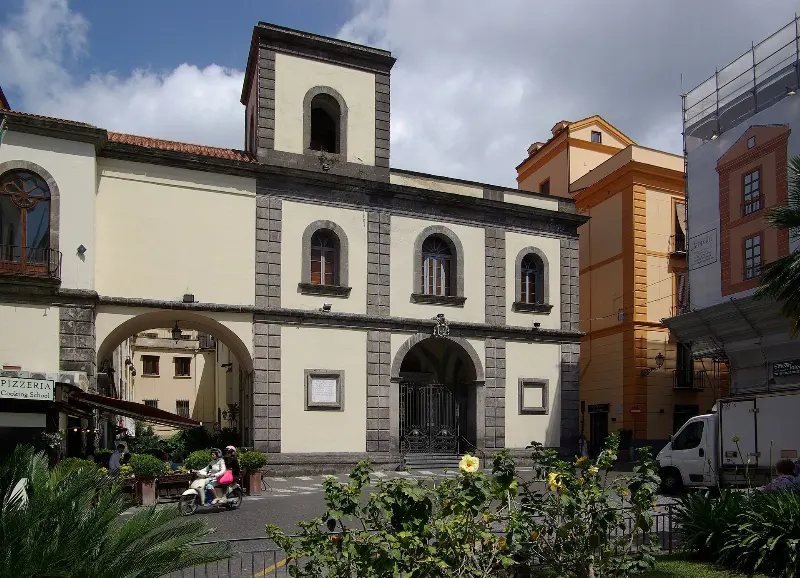
Its home is Villa Correale, also known as «alla Rota», once the counts' summer residence: an 18th-century building whose façade is marked by two tiers of arched loggias, with the entrance portal crowned by the family coat of arms. A grand 18th-century staircase with piperno stone balustrades links the floors.
The collections, floor by floor
The collections are spread over twenty-four rooms on several levels. In brief:
- Ground floor: the founders' room, rooms devoted to the history of Sorrento and a collection of 19th-century furniture and objects in Sorrento marquetry; then the archaeology sections, with Greek pottery, bronzes and Roman marbles found in the town and along the coast, and medieval fragments from the old cathedral.
- First floor: the picture gallery, with works by 17th- and 18th-century Neapolitan painters, Flemish paintings, Oriental porcelain and furniture from the same period.
- Second floor: still lifes, views by foreign painters, the rooms of the School of Posillipo, with 19th-century landscapes of the bay, and a collection of 18th-century clocks, along with glass and silverware.
- Third floor: porcelain from the great European factories, from Meissen and Sèvres to Capodimonte, and Italian majolica.
The museum also houses a library with historic editions of the works of Torquato Tasso, the poet born in Sorrento: to find out more, read our page on the town's famous people.
The garden and the belvedere
Don't leave without seeing the grounds. Around the villa lies a citrus grove with centuries-old trees, exotic plants and camellias; an avenue lined with plane trees leads to a terrace overlooking the sea, with views across the Bay of Naples to Vesuvius. It is one of the quietest viewpoints in Sorrento, away from the bustle of the centre.
Getting there and visiting tips
The museum is on Via Correale, east of the centre. From Piazza Tasso it is about a ten-minute walk, following the signs for the museum along gently sloping streets. Allow at least an hour and a half for the rooms and a little more for the garden. The museum may close for part of the year: check opening hours and tickets on the official website www.museocorreale.it before you go. Art lovers can round off the day with the Basilica of Sant'Antonino and the Cathedral; if you are looking for a quiet place to stay in this area, browse our selection of hotels in Sorrento.
Gallery 4 photos
Museo Correale di Terranova, Sorrento
01 · Photo: Gerd Fahrenhorst, CC BY 3.0 02 · Photo: Filippo Espo, CC BY-SA 4.0 03 · Photo: Tremej, CC BY-SA 4.0 04 · Photo: Carlo Dani, CC BY-SA 4.0