

Places to visit · Sorrento
Via Pietà in Sorrento: medieval palaces
The lane that follows the Roman decumanus from Piazza Tasso to the Cathedral: Palazzo Veniero, Palazzo Correale and what to see on Via Pietà.
3 min read
Via Pietà is the oldest and most atmospheric street in the centre of Sorrento: a narrow, always shaded lane leading from Piazza Tasso to the Cathedral, following the upper decumanus of the Roman town. In a few hundred metres it preserves the town's two most important medieval palaces, Palazzo Veniero and Palazzo Correale; it takes five minutes to walk, though it is worth taking your time and looking up.
A Roman decumanus in the heart of town
Sorrento's old town has kept the grid plan of Roman towns, modelled on the layout of military camps: parallel streets, the decumani, crossed at right angles by the cardines. Via Pietà corresponds to the upper decumanus, while the parallel Via San Cesareo follows another. Its full name, Via Santa Maria della Pietà, comes from the small church of the same name that stands on it. Until the late 19th century it was one of the town's main streets; then the opening of Corso Italia moved the evening stroll elsewhere, and many palaces moved their entrances to the new road. That is precisely why Via Pietà has remained almost untouched: a street to discover, quiet even though it is just steps from the square.
Palazzo Veniero, between Byzantium and the Arab world
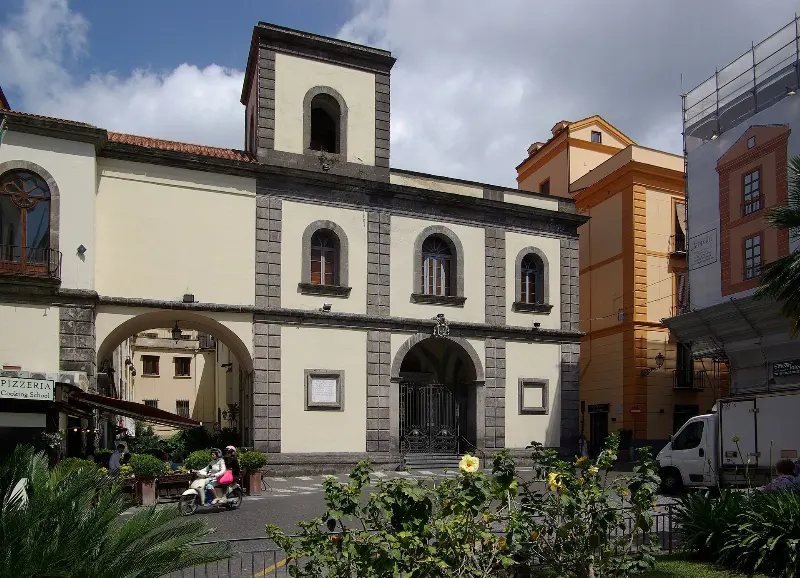
It is one of the oldest buildings in Sorrento, dating from the 12th–13th century, and a rare example of the late Byzantine and Arab-influenced architecture that spread through Campania in the same period and can also be seen in Amalfi and Ravello. The façade has three large arched windows on each floor, framed by bands of alternating yellow and grey tufa in an inlay technique that seems to anticipate in stone the tradition of Sorrento wood marquetry. The small round rosettes of the decoration once held Hispano-Moresque ceramic bowls. The façade can be admired from the street; the interior is private.
Palazzo Correale and the church of the Pietà
A little further on is Palazzo Correale, from the 14th–15th century, built on a Catalan plan: you will recognise it by its mullioned windows in dark tufa, each different in shape and design, and by the stone portal with the characteristic Durazzo-Catalan mouldings. Above the entrance is carved the coat of arms of the Correale family, a Saint Andrew's cross with four roses. In the 17th century the palace became a home for orphan girls dedicated to Santa Maria della Pietà, which explains the small Baroque church alongside and the name of the street. The same family, whose descendants founded the Museo Correale, also owned other buildings nearby: in one of them, at the start of the street, the courtyard preserves a large panel of 18th-century majolica tiles depicting a colonnade in perspective and landscape scenes.
Up to the Cathedral bell tower
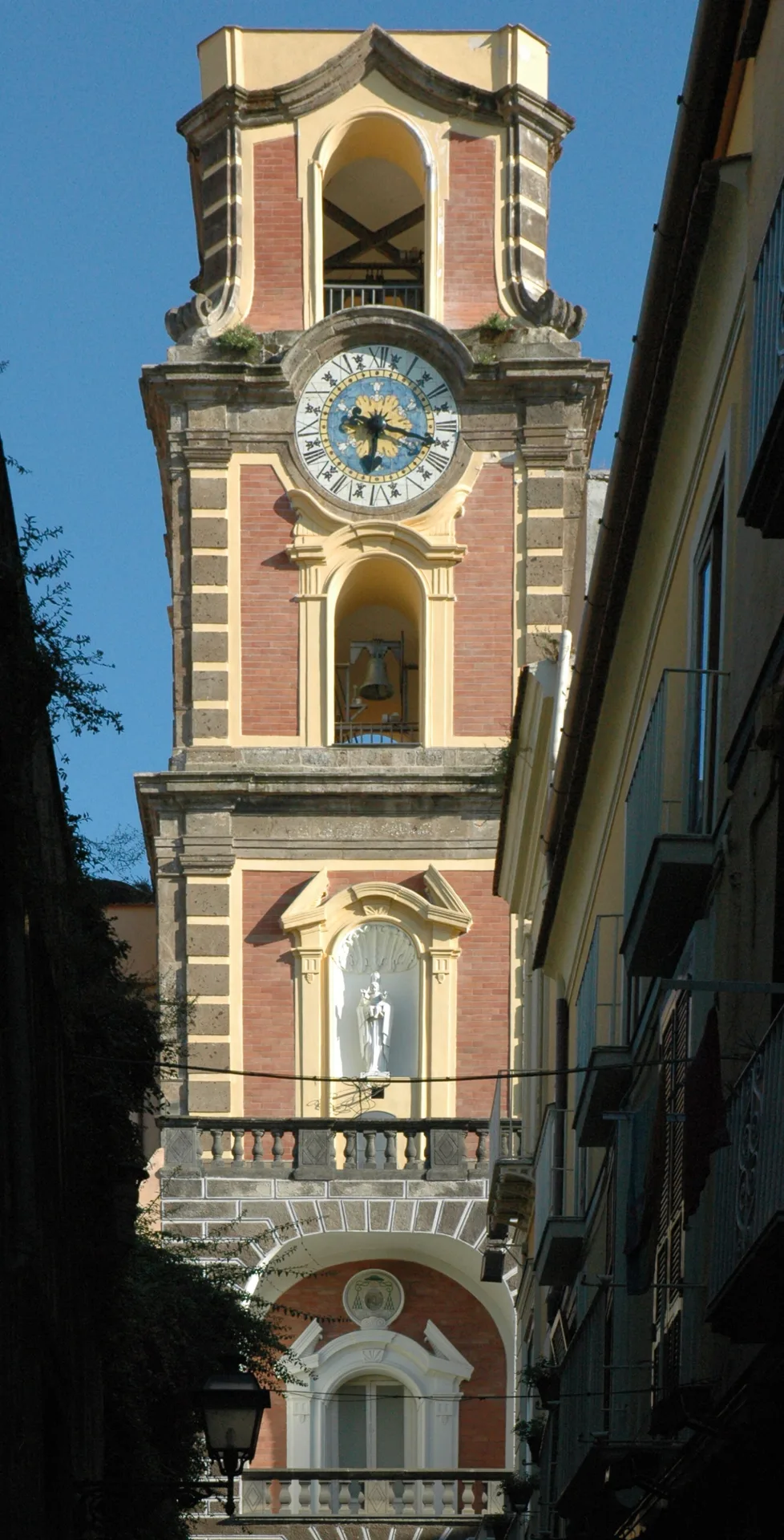
The street ends by the Cathedral, dedicated to Saints Philip and James, and its bell tower: a tower of stacked storeys with, at its base, an arch supported by reused ancient columns and, higher up, a majolica clock. Along the way, look out for the piperno doorways, the courtyards glimpsed through open gates and, in a side alley, a 15th-century loggia, a rare example of Aragonese-era architecture.
Getting there and tips
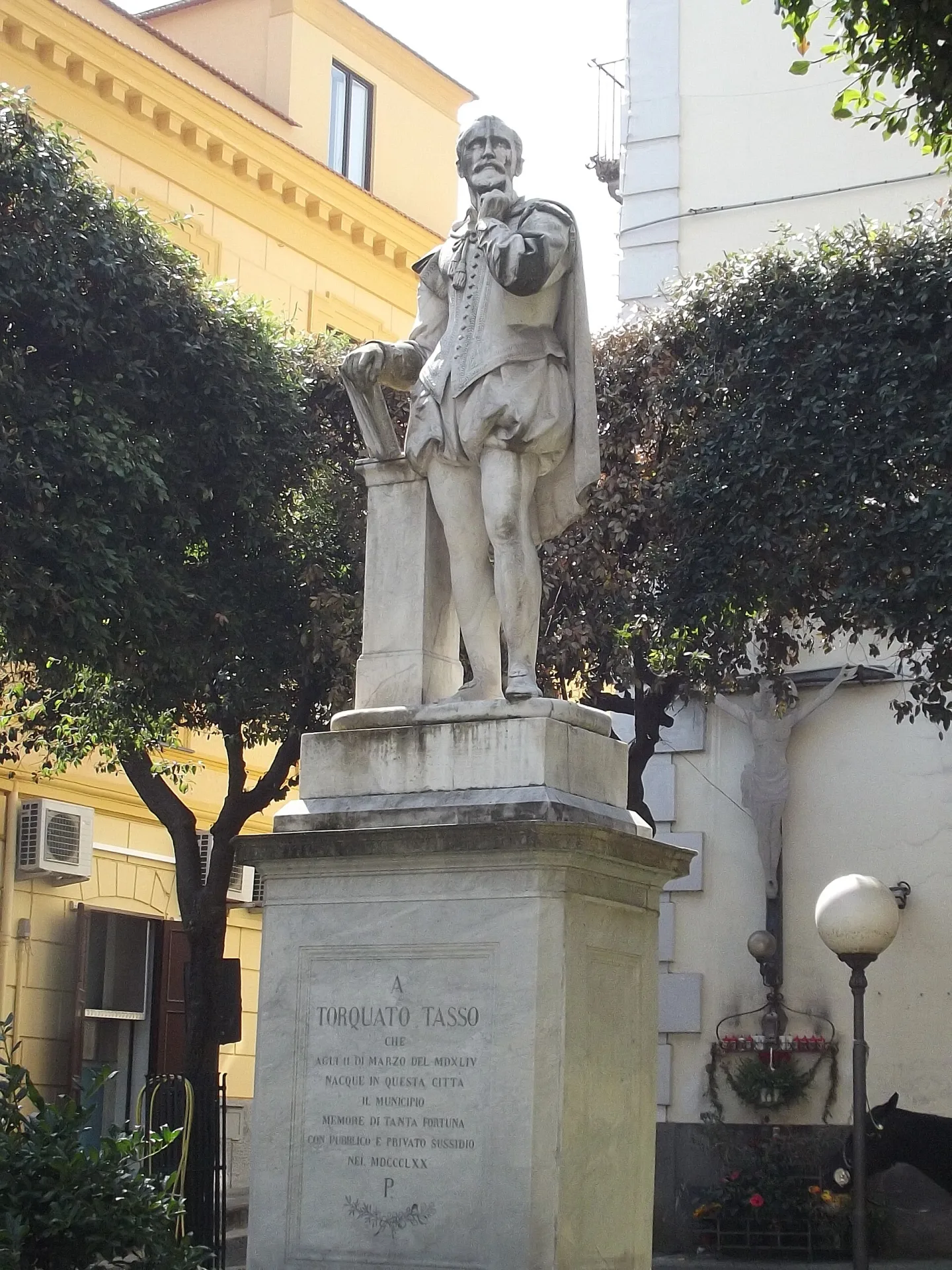
Via Pietà starts from the corner of Piazza Tasso where the statue of Torquato Tasso stands: just turn into it and follow it westwards. It is a narrow street where the odd scooter may pass, so walk with a little care. Thanks to the shade, it is pleasant even in the hottest hours of summer. For a complete two-hour walk, continue from the Cathedral along Via San Cesareo to the Sedil Dominova and loop back to Piazza Tasso; our history of Sorrento will help you place each building in its time. For a break, the surrounding lanes offer typical restaurants and trattorias.
Gallery 3 photos
Via Pietà in Sorrento
01 · Photo: Steven Chiefa, Public domain 02 · Photo: Elliott Brown, CC BY 2.0 03 · Photo: DimiTalen, CC0 1.0