


Places to visit · Massa Lubrense
Punta Campanella, Minerva's headland
The far tip of the Sorrento peninsula, facing Capri: the story of Minerva's temple and the tower, plus the path from Termini and practical tips.
3 min read
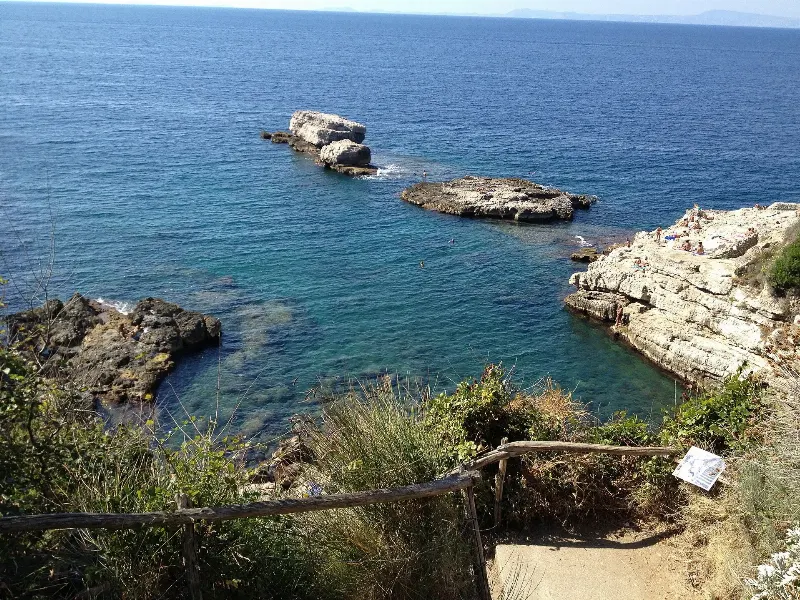
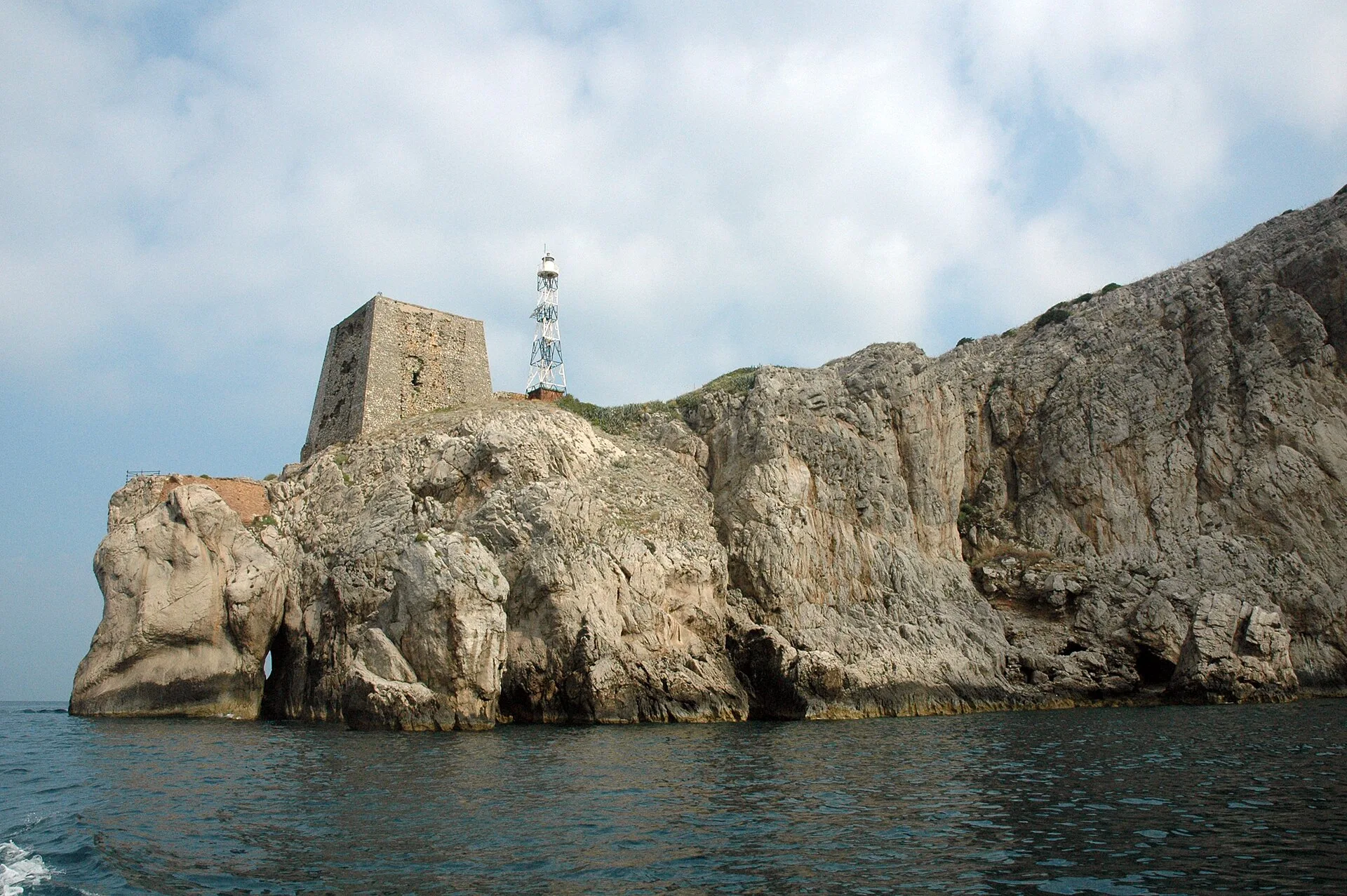
Punta Campanella is the western tip of the Sorrento peninsula, in the municipality of Massa Lubrense: a limestone headland reaching out towards Capri, just a few kilometres away across the strait of Bocca Piccola. A famous sanctuary of Athena once stood here, an Angevin tower and a lighthouse still rise here, and the only way to get here is on foot, along an ancient mule track through Mediterranean scrub with views over two bays. It is one of the finest walks on the coast.
Minerva's headland
The Greeks called this cape Athenaion, after the temple of Athena that crowned it; to the Romans it became the Promontorium Minervae. According to myth, the sanctuary was founded by Ulysses, and tradition also links these waters with the cult of the Sirens, whom legend places on the islets not far away in the Gulf of Salerno. Visible from afar, the temple was a landmark for sailors rounding the cape between the Bay of Naples and the Gulf of Salerno.
Archaeological evidence confirms the importance of the place: near the eastern landing, an inscription in the Oscan language is carved straight into the rock. Dating from the 2nd century BC, it records the magistrates of the sanctuary of Minerva, and recent excavations have brought to light remains of the sacred area. The historian Livy records that in 172 BC Rome decreed sacrifices at the temple of Minerva in Campania too. Along the path you will also pass the ruins of a Roman villa. To place these centuries in context, read our history of Sorrento.
The Minerva Tower and the bell
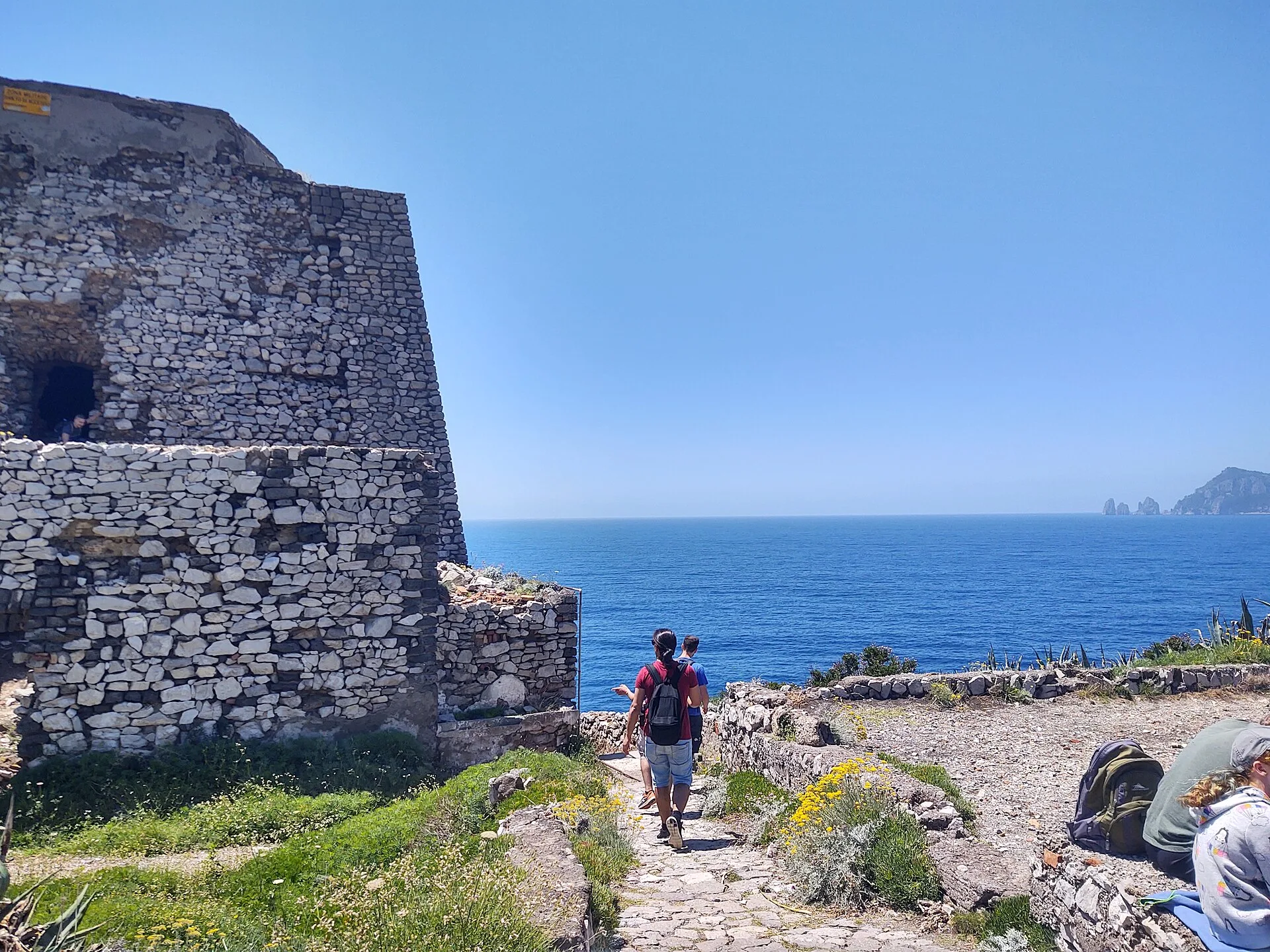
In the 14th century King Robert of Anjou had a watchtower built on the point, the Minerva Tower (sources give 1334 or 1335). It was rebuilt in 1566 as part of the network of coastal towers ordered by the Spanish viceroys against pirate raids. When enemy sails appeared on the horizon, a bell rang from the tower to warn the villages along the coast: this, according to the most widely accepted explanation, is where the name Punta della Campanella (Bell Point) comes from. Next to the tower an automatic lighthouse is in operation today.
Marine protected area
Since 1997 the sea around the headland has been part of the Punta Campanella Marine Protected Area, which safeguards about 40 kilometres of coastline between the Sorrento peninsula and the Amalfi Coast. The seabed is home to Posidonia meadows, underwater caves and a wide variety of fish; the area closest to the point is subject to the strictest protection rules. The nearby bay of Ieranto, visible from the path, is one of the area's most precious corners.
The path from Termini
The walk starts from Termini, a hamlet of Massa Lubrense more than 300 metres above sea level, which can be reached from Sorrento by local bus or by car (about 10 kilometres). From the little square you take Via Minerva, an ancient Greco-Roman road that is partly paved, heading down through olive groves and then among mastic, broom and spurge bushes to the point. Going there, all downhill, takes about an hour; the return uphill takes longer and some stamina.
Practical tips
- Wear hiking shoes or shoes with a good grip: the surface is stone and can be slippery.
- There is no shade or water along the way: bring drinks, a hat and sunscreen, and avoid the hottest hours in summer.
- The best seasons are spring and autumn, with the scrub in flower and clear light over Capri.
- There is no swimming at the point: the coast is sheer and the sea here is protected.
- For another walk combining sea and archaeology, try the Baths of Queen Giovanna on Capo di Sorrento.
To plan your trip, see our guide on how to get to Sorrento and, to stay a few days in the area, the where to stay section. After the walk, a meal in Termini or in the villages of Massa Lubrense is a must: you will find ideas in the where to eat section.
Gallery 4 photos
Punta Campanella, Minerva's headland
01 · Photo: DimiTalen, CC0 02 · Photo: Axico, CC BY-SA 4.0 03 · Photo: Angela Milano, CC BY-SA 4.0 04 · Photo: Stiflele, CC BY-SA 4.0