


History and traditions · Sorrento
'A riggiola: the painted tiles of the Sorrento coast
From Aragonese Spain to the homes of the coast: the story of the riggiola, the hand-painted majolica tile, and of the riggiularo who knows how to lay it.
2 min read
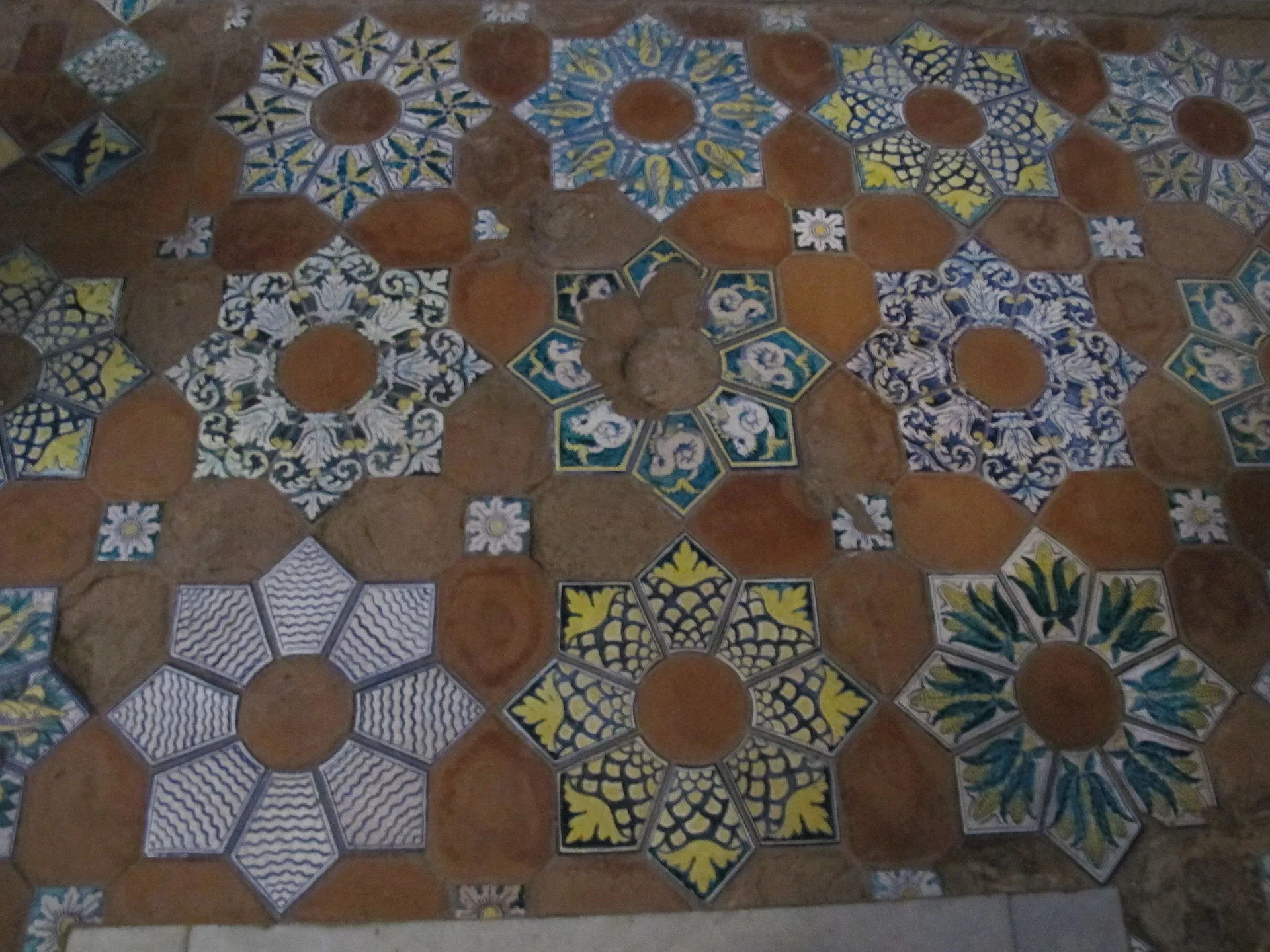
Step into an old house on the Sorrento peninsula and you will often find yourself walking on a colourful floor of tiles decorated with geometric or floral patterns. This is the riggiola: a majolica tile, often hand-painted, still made today along the Sorrento and Amalfi coasts. It is very hard-wearing, so much so that it is also used to pave outdoor spaces such as terraces and courtyards.
'O riggiularo, a skilled craft
The person who lays riggiole is known in dialect as 'o riggiularo. He is no ordinary floor-layer: the word describes a particularly expert craftsman, able to cut the tiles where needed and above all to set them out with a skill no one else can match, fitting the patterns together until they form a ceramic carpet.
A story that comes from Spain
The history of the riggiola is linked to the Aragonese kings of Naples. According to tradition, around 1450 Alfonso the Magnanimous, the first ruler of the dynasty on the Neapolitan throne, grew homesick for the majolica that adorned the palaces and domes of his homeland. He therefore summoned to court Juan al Murcì, director of the ceramic workshops of Manises, near Valencia, and charged him with training apprentices to make rajoletes pintadas, colourful majolica tiles. That is how riggiole and riggiulari came to southern Italy too.
The name is of Spanish origin, but its etymology is debated. The linguist Francesco D'Ascoli linked it to the Castilian words rejuela and rejal and stressed that “riggiola” is an exclusively Neapolitan word, not to be confused with the Tuscan “reggiola”. Renato De Falco, on the other hand, suggested it derived from the Latin rubeola, “reddish”, an unconvincing theory: riggiole were first made with multicoloured designs, and only later were plain red ones produced, simpler and cheaper. The word majolica itself, after all, recalls the island of Majorca, the hub of a thriving trade in these ceramics.
Where to see riggiole
In the 18th century Neapolitan majolica reached its peak: one masterpiece is the Poor Clares' cloister of Santa Chiara in Naples, whose benches and pillars are entirely clad in riggiole painted with landscapes, scenes of daily life and mythological figures. In Sorrento, just peep into the courtyard of Palazzo Correale on Piazza Tasso to admire a striking majolica wall from 1772, with painted columns, landscapes and figures.
The riggiola is one of the peninsula's many crafts, alongside Sorrento marquetry: a small square of glazed terracotta that holds centuries of exchanges between the shores of the Mediterranean.
Gallery 3 photos
'A riggiola
01 · Photo: Sailko, CC BY 3.0 02 · Photo: Sailko, CC BY-SA 3.0 03 · Photo: Lalupa, CC BY-SA 4.0