

History and traditions · Sorrento
Famous people of Sorrento
Saint Antoninus and the whale miracle, Torquato Tasso and his epic poem, Nietzsche, Ibsen and Caruso: the great names linked to Sorrento.
4 min read
The two names every Sorrentine will mention first are Saint Antoninus the abbot, the town's patron saint, and Torquato Tasso, the poet of Jerusalem Delivered, born here in 1544. Alongside them, over the centuries Sorrento has welcomed writers, philosophers and musicians who spread its fame around the world. Here is who they were and where to find their traces in town.
Saint Antoninus, the patron abbot
His life is partly shrouded in legend. Born in the second half of the 6th century in Campagna, inland from Salerno, Antoninus became a Benedictine monk; after the Lombards destroyed his monastery he took refuge in Castellammare di Stabia, where he became a trusted aide of Bishop Catellus. Tradition says the two withdrew to Monte Faito and built an oratory there dedicated to the Archangel Michael. Called by the people of Sorrento, Antoninus entered the monastery of Sant'Agrippino, became its abbot and died there on 14 February 625. In his spare time, it is said, he worked as a carpenter and a vine-dresser.
His most famous miracle is that of the child swallowed by a whale off the beach and returned alive to his mother: in memory of it, two huge cetacean ribs are kept at the entrance of the Basilica of Sant'Antonino. The saint's relics rest in the crypt, surrounded by votive offerings from sailors who survived shipwrecks. His feast day, 14 February, is one of the most heartfelt days of the year, with a procession through the streets of the centre (see traditions and events). Two statues honour him: one in Piazza Tasso and one in Piazza Sant'Antonino, in front of the Town Hall.
Torquato Tasso, the poet of Jerusalem Delivered
Torquato Tasso was born in Sorrento on 11 March 1544 to Bernardo, a man of letters in the service of the Prince of Salerno, Ferrante Sanseverino, and the Neapolitan noblewoman Porzia de' Rossi. When the prince fell from favour, his father followed him into exile and the boy grew up far from his mother, between Naples, Rome, Urbino and Venice. He studied in Padua and Bologna and in 1565 entered the service of the Este family in Ferrara, where he wrote the pastoral drama Aminta and composed Jerusalem Delivered, published in 1581.
Tormented by anxiety and fears of persecution, in 1577 he fled the court and reached Sorrento disguised as a shepherd to present himself to his sister Cornelia: an episode that local tradition still recounts with affection. Back in Ferrara, he was confined from 1579 to 1586 in the hospital of Sant'Anna; years of wandering followed between Mantua, Rome, Naples and Florence. He died in Rome, in the monastery of Sant'Onofrio on the Janiculum, on 25 April 1595, on the eve of the poetic coronation on the Capitoline Hill that he had been promised.
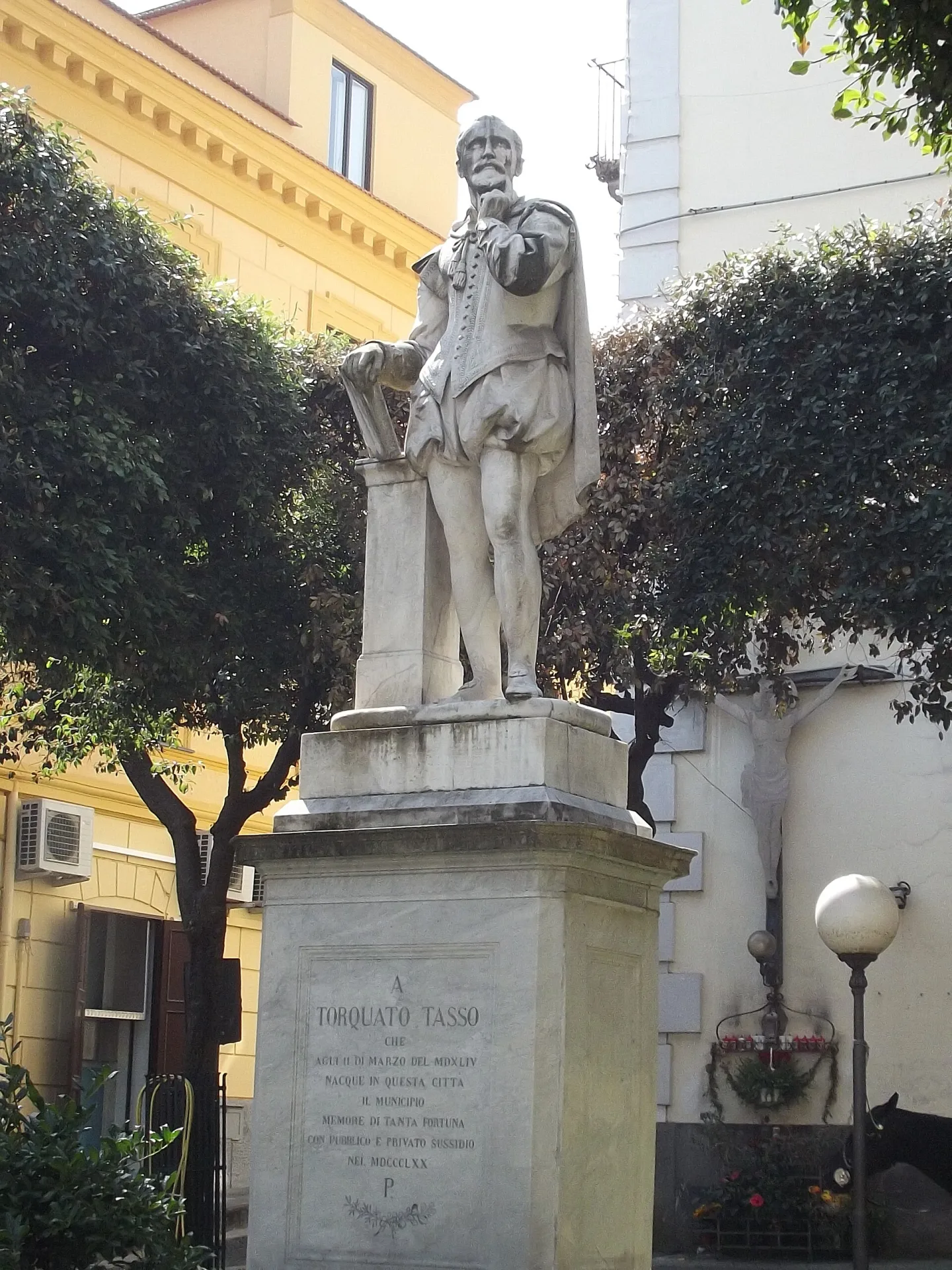
The town remembers him with the statue by Gennaro Calì, unveiled in 1870 at the entrance to Via Pietà, and with the name of its main square, Piazza Tasso. A plaque marks the site of his birthplace, on the edge of the cliff overlooking the bay.
The guests who made Sorrento famous
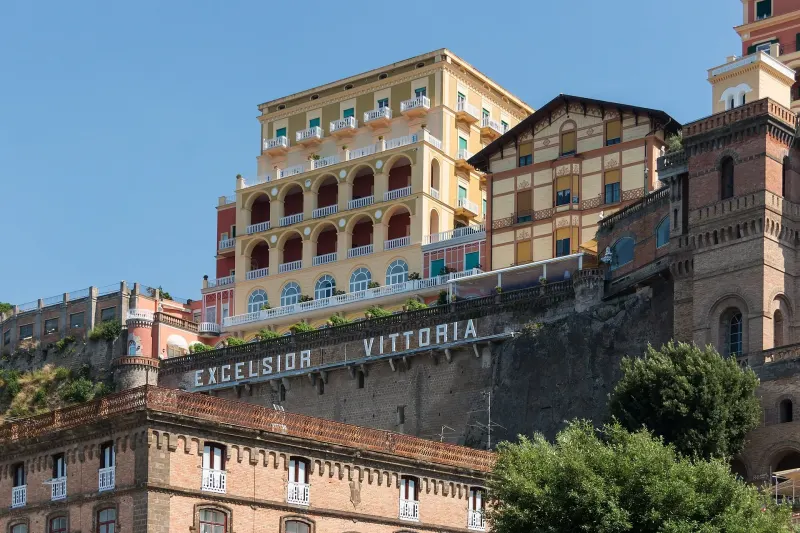
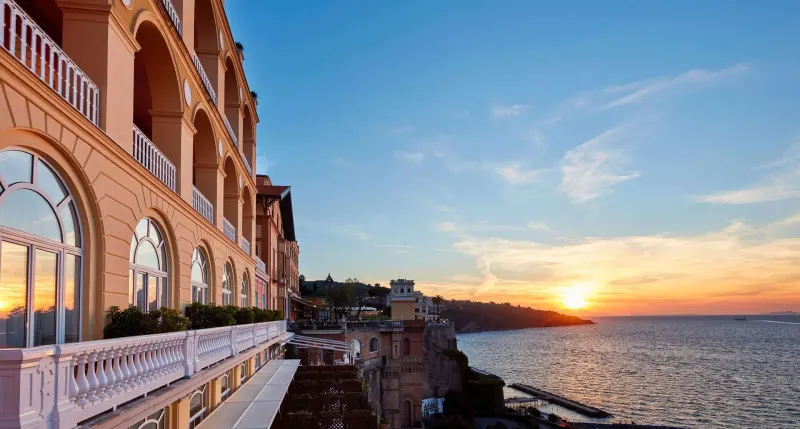
From the 19th century Sorrento became a favourite of writers and artists. Henrik Ibsen wrote part of Peer Gynt here. In the autumn of 1876 Friedrich Nietzsche stayed at Villa Rubinacci, where he worked on Human, All Too Human, and met Richard Wagner, a guest at the Grand Hotel Excelsior Vittoria, for the last time as a friend. In the 1920s the Russian writer Maxim Gorky lived in the town for several years. In 1921 Enrico Caruso stayed at the same hotel shortly before his death: that stay inspired Lucio Dalla's song Caruso (1986). And it was Torna a Surriento by the De Curtis brothers that made the town's name a symbol of Neapolitan song worldwide.
In their footsteps, on foot
A short walk through the centre links all these places. From Piazza Tasso, with the statues of the poet and the patron saint, you reach the Basilica of Sant'Antonino in a few minutes; from there continue to the Villa Comunale and the Cloister of San Francesco, where the view over the bay is the same one that enchanted 19th-century travellers. To set these figures in their time, read our history of Sorrento; for a break along the way, here are restaurants and trattorias in the centre.
Gallery 4 photos
Famous people of Sorrento

01 · Photo: Berthold Werner, CC BY-SA 3.0 02 · Photo: Elliott Brown, CC BY 2.0 03 · Photo: Berthold Werner, CC BY-SA 3.0 04 · Photo: Gualtiero De Bacci Venuti, Public domain