
Places to visit · Sorrento
The Valley of the Mills in Sorrento
A green gorge just steps from Piazza Tasso, with the ruins of an abandoned mill: the story of Sorrento's Valley of the Mills and where to see it.
3 min read
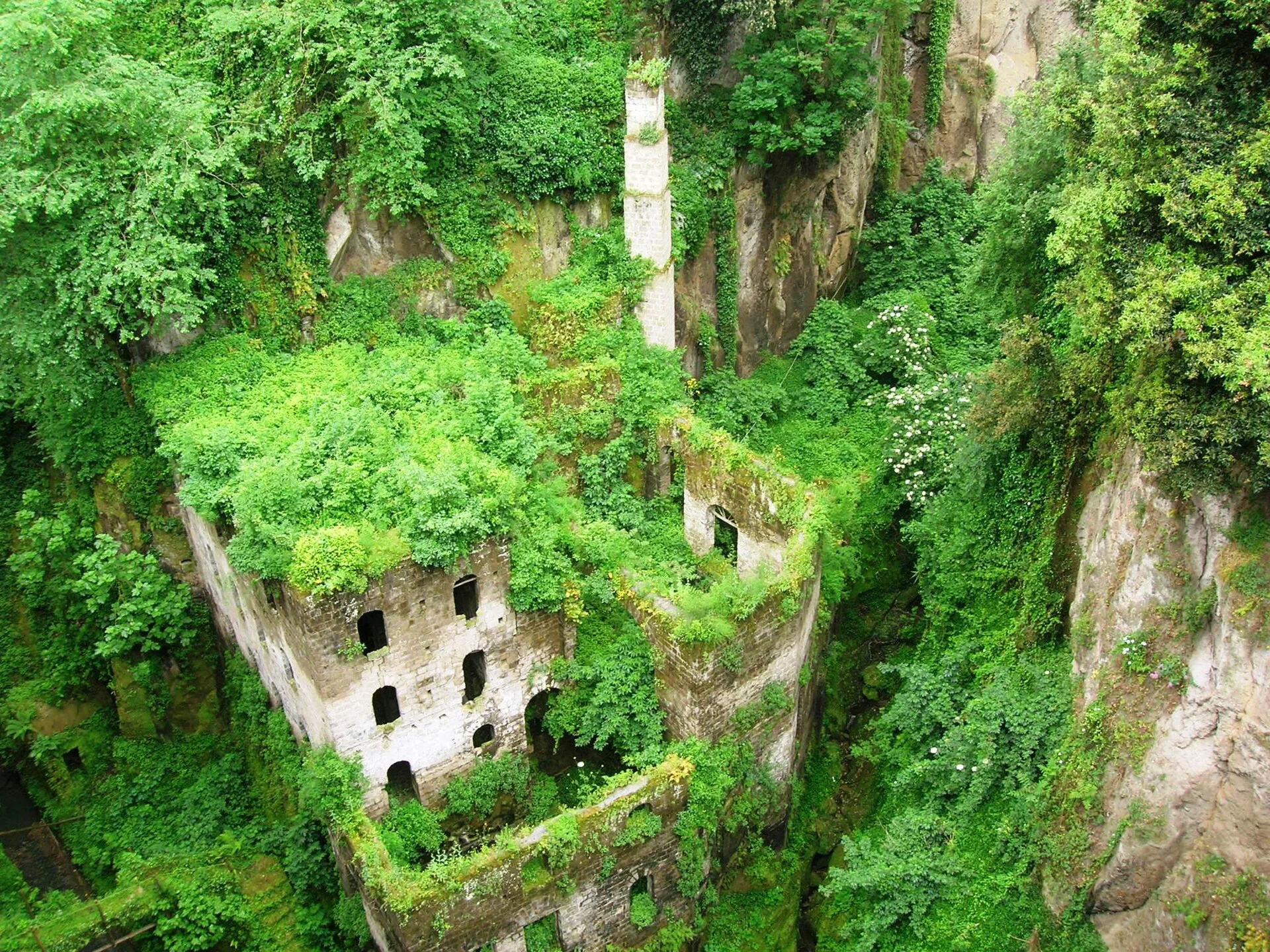
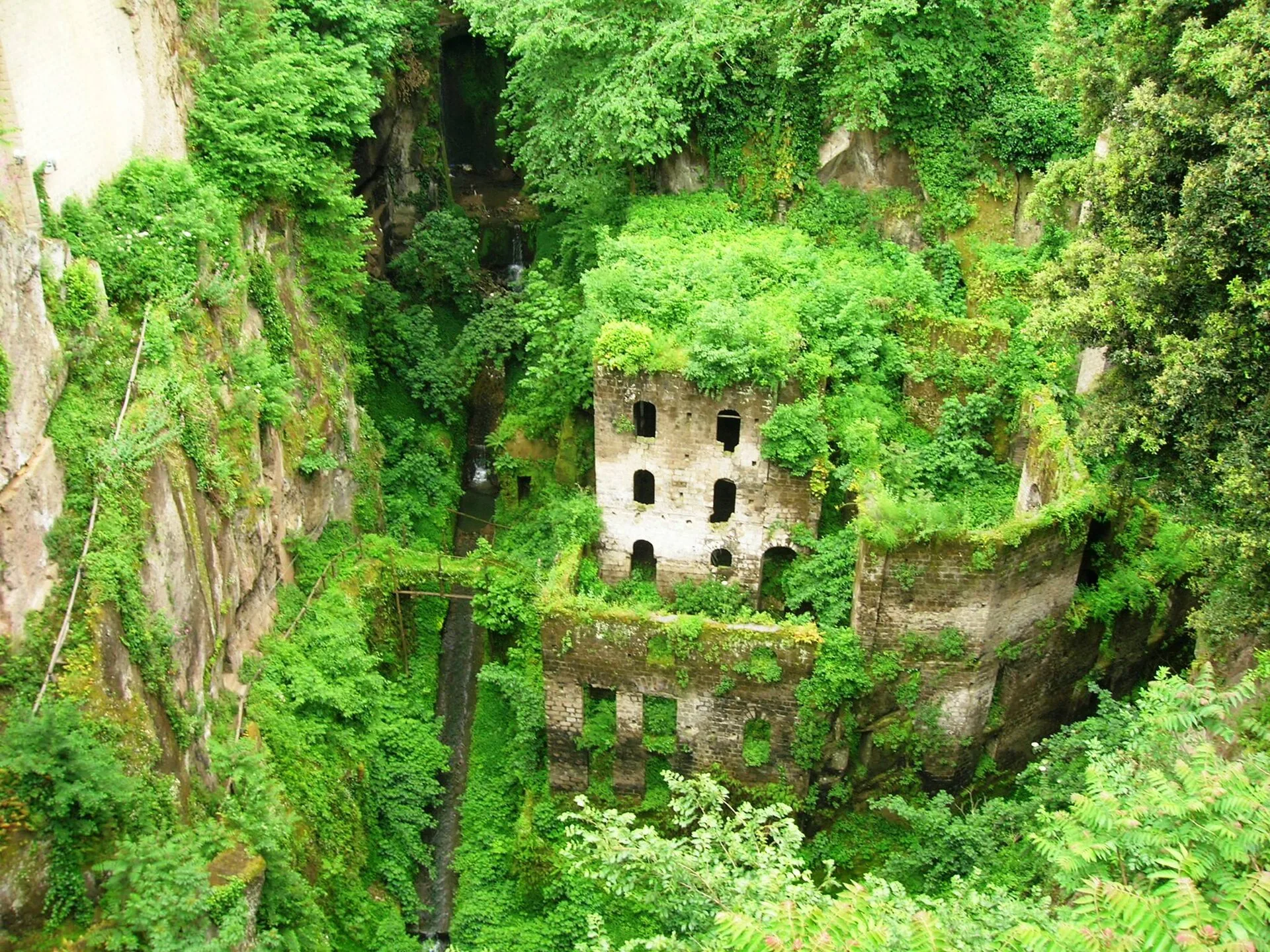
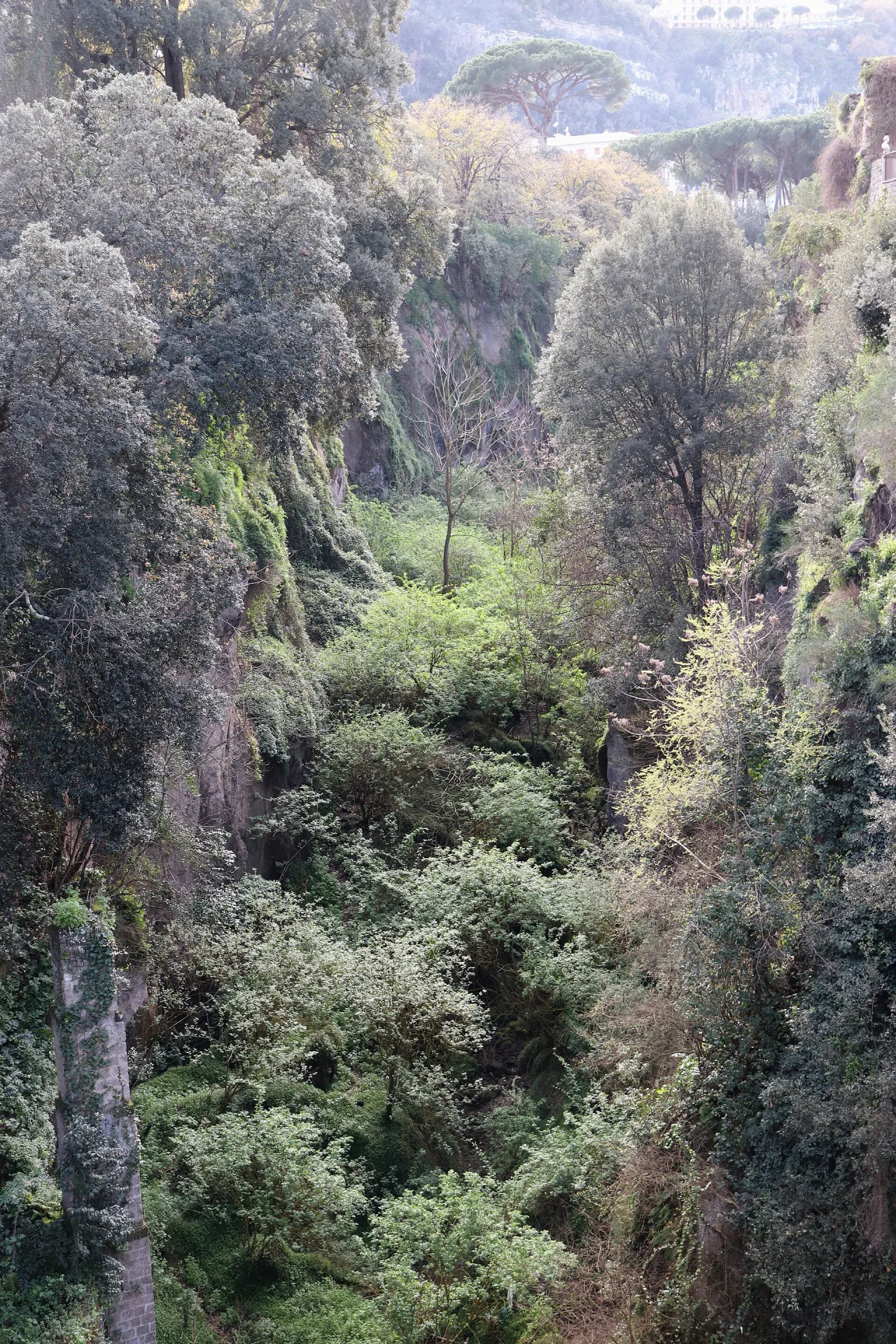
The Vallone dei Mulini, or Valley of the Mills, is a deep green gorge that opens right in the heart of Sorrento, just a few steps from Piazza Tasso. At the bottom, among ferns, moss and trees growing on the rooftops, stand the ruins of an old mill abandoned for more than a century. You cannot go down into it, but simply looking over the railing on Via Fuorimura is enough to be captivated by one of the most photographed views in town.
A gorge born of volcanoes
Sorrento stands on a great bed of tuff, laid down by eruptions of the Phlegraean Fields tens of thousands of years ago (around 35,000, according to the most widely quoted estimates). Over the millennia, streams fed by springs in the hills carved deep ravines into the tuff, the valloni, which run down to the sea and once also marked the boundaries between the towns of the peninsula.
In Sorrento there were three main ravines, surrounding the ancient town like a natural moat. The central one survives as the most intact and striking stretch: the Valley of the Mills, which runs down from the Piazza Tasso area towards the Porta degli Anastasi and the La Rupe villa. The other two branches have largely been filled in and covered by roads and buildings.
Mill, sawmill and wash-house
The valley takes its name from the mill built at the bottom, which used the stream's water to grind grain for the people of Sorrento. According to local chronicles, the ravines belonged to the Tasso family in the 16th century and later passed, together with the mills and nearby gardens, to the Correale family, the same family that gave its name to the Museo Correale.
Next to the mill a water-powered sawmill supplied planks of cherry, olive and walnut to the town's cabinet makers: a small cog in the success of Sorrento marquetry. There was also a public wash-house, where local women came down to do their laundry, and the walls are still dotted with caves and wells from which water was drawn and, it seems, tuff was quarried to build houses.
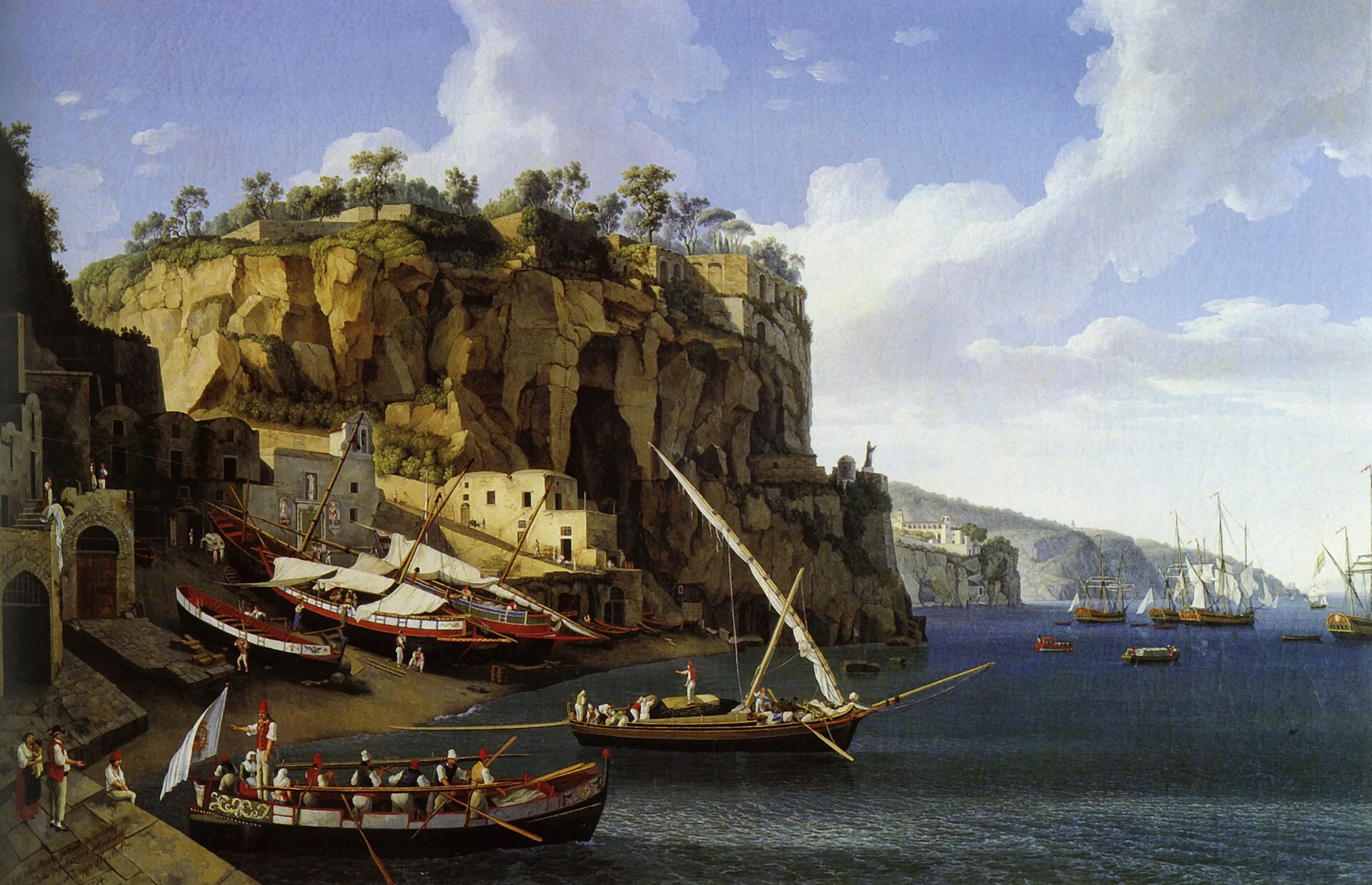
For centuries the valley had a direct outlet to the sea at Marina Piccola: farmers, millers and fishermen walked up and down the floor of the gorge. Their daily lives left almost no trace in the chronicles, but the place fascinated 19th-century painters and photographers, whose views now show us what it looked like.
The end of the mill and the return of nature
The turning point came in 1866, when the bridge across the gorge was replaced by today's Piazza Tasso. To build it, part of the ravine was filled in and the water channelled away: the valley was cut off from the sea and left without fresh air. The mill stopped working in the early 20th century and was abandoned.
Since then nature has taken everything back. On the sheltered floor, humidity stays constantly around 80%, creating an almost tropical undergrowth microclimate where rare ferns such as hart's-tongue thrive, along with moss and climbing plants wrapping the old walls.
Where to see it and practical tips
The viewpoint is on Via Fuorimura, a couple of minutes' walk from Piazza Tasso: from here the railing looks straight down onto the mill. Another glimpse can be had from the side of the square towards Corso Italia.
- The floor of the valley is private and closed to the public: do not try to climb over the fences, as the tuff walls are unstable.
- The best light is around midday, when the sun reaches the bottom of the gorge.
- It is a perfect stop on a stroll through the historic centre; if you are looking for somewhere to stay nearby, see the where to stay section.
Gallery 4 photos
The Valley of the Mills in Sorrento
01 · Photo: Mentnafunangann, CC BY-SA 3.0 02 · Photo: Mentnafunangann, CC BY-SA 3.0 03 · Photo: KaiBorgeest, CC BY-SA 4.0 04 · Photo: Jacob Philipp Hackert, Public domain